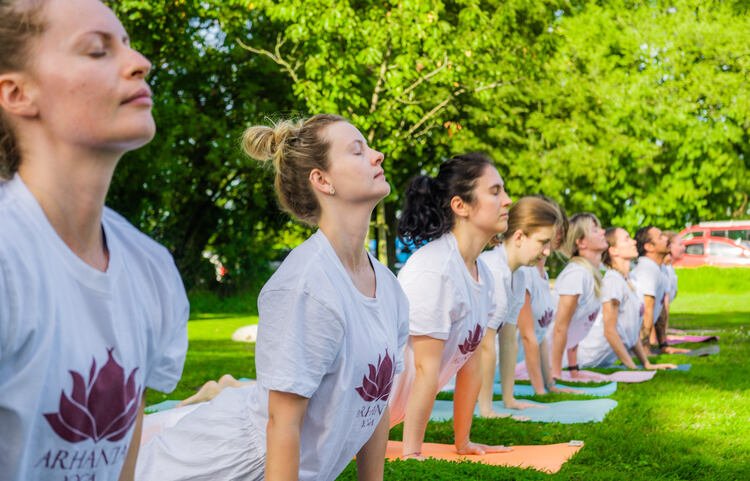
Hey there, fellow yogi or curious newcomer. Picture this: It’s a crisp morning, and I’m rolling out my mat in a sunlit studio, heart pounding a bit from nerves. That was me years ago, dipping my toes into Vinyasa yoga for the first time. I thought yoga was all about slow stretches and zen vibes, but oh boy, was I in for a surprise. The class flowed like a dance, breath syncing with every move, and by the end, I felt invigorated, stronger, and oddly at peace. If you’re here wondering what Vinyasa yoga really is, or how it can transform your practice as a student or teacher, you’ve landed in the right spot. This guide draws from my own journey—sweaty mishaps and all—plus solid insights to help you dive in confidently. Let’s flow through it together, no fluff, just real talk on breath, movement, and why this style keeps pulling people back to the mat.
Understanding the Basics of Vinyasa Yoga
Vinyasa yoga stands out as a dynamic style where poses connect seamlessly, guided by your breath, creating a rhythmic flow that feels almost meditative. It’s not about holding still; it’s movement with intention, building heat and focus as you transition from one asana to the next. Think of it as yoga’s version of a well-choreographed routine, adaptable for any level. From my experience, it’s the style that hooked me because it mirrors life’s ebb and flow—sometimes challenging, always rewarding.verywellfit.com
The Meaning Behind “Vinyasa”
The term “Vinyasa” comes from Sanskrit, breaking down to “vi” (in a special way) and “nyasa” (to place), essentially meaning to arrange poses thoughtfully with breath as the anchor. In practice, it refers to those smooth links between postures, like the classic sequence of plank to chaturanga to upward dog to downward dog. I remember fumbling through my first Vinyasa transition, arms shaking, but that “special placement” clicked over time, turning chaos into grace.oneflowyoga.com
How Vinyasa Differs from Static Yoga
Unlike styles where you hold poses for minutes, Vinyasa keeps you moving, syncing inhales and exhales to build energy and prevent boredom. It’s more cardio-infused, heating the body from within to detox and strengthen. Early on, I switched from static holds to Vinyasa and noticed my endurance skyrocket—proof that this flow isn’t just pretty; it’s powerful.
The History and Origins of Vinyasa Yoga
Vinyasa’s roots trace back to ancient India, evolving through teachers like T. Krishnamacharya in the early 20th century, who blended breath with movement to create fluid sequences. His students, including Pattabhi Jois, popularized it via Ashtanga, but Vinyasa branched out as a more creative, less rigid form. In my teaching days, sharing this history helped students appreciate the depth—it’s not a modern fad; it’s a timeless evolution.
Key Influencers in Vinyasa’s Development
Krishnamacharya taught icons like B.K.S. Iyengar and Indra Devi, but it’s his emphasis on Vinyasa Krama—step-by-step progression—that shaped today’s classes. I once attended a workshop tracing these lineages, and it felt like connecting dots in a family tree, making my practice feel part of something bigger.oneflowyoga.com
Modern Evolution of Vinyasa
Today, Vinyasa adapts globally, incorporating music, themes, or power elements, thanks to teachers like Shiva Rea and studios worldwide. From heated rooms to online flows, it’s accessible yet true to its breath-focused core. I’ve seen it morph in my own classes, adding twists for fun, keeping things fresh without losing essence.

Vinyasa Yoga Sequences – Foundational Sequences for Yoga Teachers …
Core Principles of Vinyasa Yoga
At its heart, Vinyasa revolves around breath-synchronized movement, or “one breath, one movement,” fostering mindfulness and flow state. Poses build progressively, warming up muscles before peaks, then cooling down. It’s this principle that turned my scattered mind into a focused one during tough days on the mat.
Breath as the Foundation
Ujjayi breath— that oceanic sound—guides every transition, oxygenating muscles and calming nerves. I tell students it’s like your internal rhythm section; miss a beat, and the flow falters. Mastering it was my game-changer, turning workouts into meditations.arhantayoga.org
Flow and Transitions
Smooth links, like sun salutations, create the “flow” moniker, emphasizing grace over perfection. Props help modify, ensuring inclusivity. In group classes, watching everyone sync transitions feels communal, a light-hearted reminder we’re all in this wobbly boat together.
Mindfulness in Motion
Vinyasa encourages present-moment awareness, reducing stress as you tune into body cues. It’s not just physical; it’s mental hygiene. I’ve had breakthroughs mid-flow, laughing at how a simple downward dog cleared my head better than coffee.
Benefits of Vinyasa Yoga
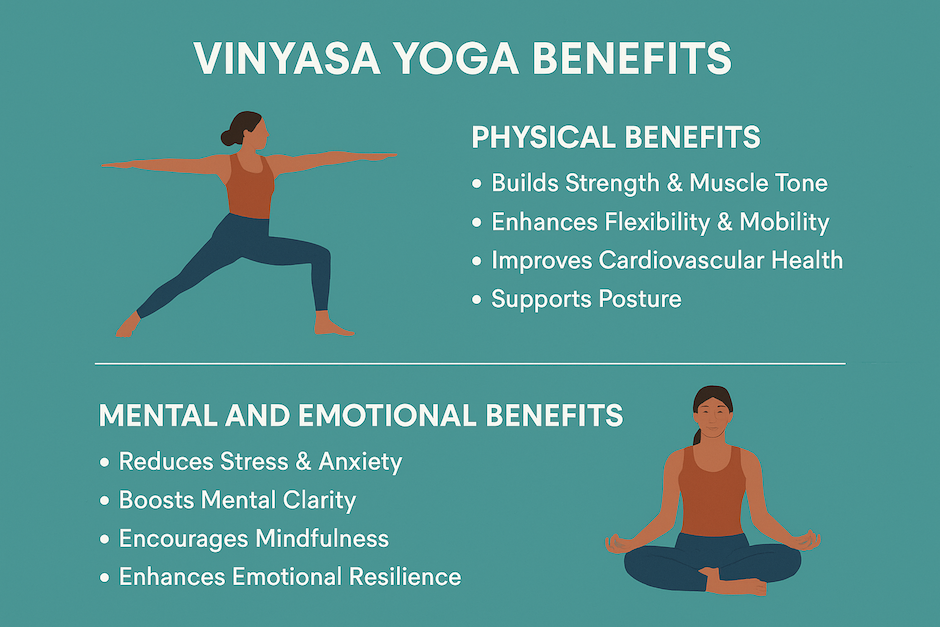
Practicing Vinyasa boosts cardiovascular health, builds strength, and enhances flexibility through constant movement and breath work. It’s a full-body tune-up that leaves you energized, not drained. From my years on the mat, the real perk is that post-class glow—sweaty, sure, but soul-satisfied.nike.com
What is Vinyasa Yoga? Complete Guide to This Dynamic Practice
- Physical Strength: Engages core, arms, and legs in sequences like warriors and planks.
- Improved Flexibility: Flows stretch hamstrings, hips, and spine dynamically.
- Cardio Endurance: Raises heart rate, burning calories like a gentle run.
- Stress Relief: Breath focus lowers cortisol, promoting calm.
- Better Balance: Poses challenge stability, sharpening coordination.
Pros and Cons of Vinyasa Yoga
Pros include its adaptability for all levels, fun variety, and holistic fitness gains. Cons? It can be intense for beginners, risking injury without proper form, and some find the pace overwhelming at first. I love how it keeps me engaged, but I always cue mods to avoid burnout.
| Benefit | Description | Who It Helps Most |
|---|---|---|
| Cardiovascular Health | Increases heart rate through flows | Those seeking low-impact cardio |
| Muscle Toning | Builds strength in dynamic holds | Fitness enthusiasts |
| Mental Clarity | Enhances focus via breath | Stressed professionals |
| Detoxification | Sweating aids toxin release | Wellness seekers |
Vinyasa Yoga vs. Other Styles: A Comparison
Vinyasa shines in its fluidity compared to others, offering a middle ground between intensity and relaxation. It’s faster than Hatha but more creative than Ashtanga. In my mixed-style journey, Vinyasa felt like the Goldilocks choice—just right for daily practice.webmd.com
Vinyasa vs. Hatha Yoga
Hatha focuses on static poses held longer for alignment, while Vinyasa links them with breath for flow. Hatha suits beginners building basics; Vinyasa adds cardio. I started with Hatha for foundation, then flowed into Vinyasa for excitement.healthline.com
Vinyasa vs. Ashtanga Yoga
Ashtanga follows fixed sequences, rigorous and traditional; Vinyasa allows teacher creativity. Ashtanga builds discipline; Vinyasa offers variety. Teaching both, I see Ashtanga fans crave structure, while Vinyasa lovers enjoy surprises.quora.com
| Style | Pace | Focus | Best For |
|---|---|---|---|
| Vinyasa | Fast-flowing | Breath-movement sync | Dynamic energy |
| Hatha | Slow, held poses | Alignment and basics | Beginners, recovery |
| Ashtanga | Structured series | Discipline and strength | Advanced practitioners |
Vinyasa Yoga for Beginners: Getting Started
Newbies, don’t fret—start slow with basic flows, focusing on breath over perfection. Use modifications like knee-down chaturanga. My first class? A comedy of errors, but persistence paid off, turning awkwardness into confidence.everydayhealth.com
Essential Poses for Beginners
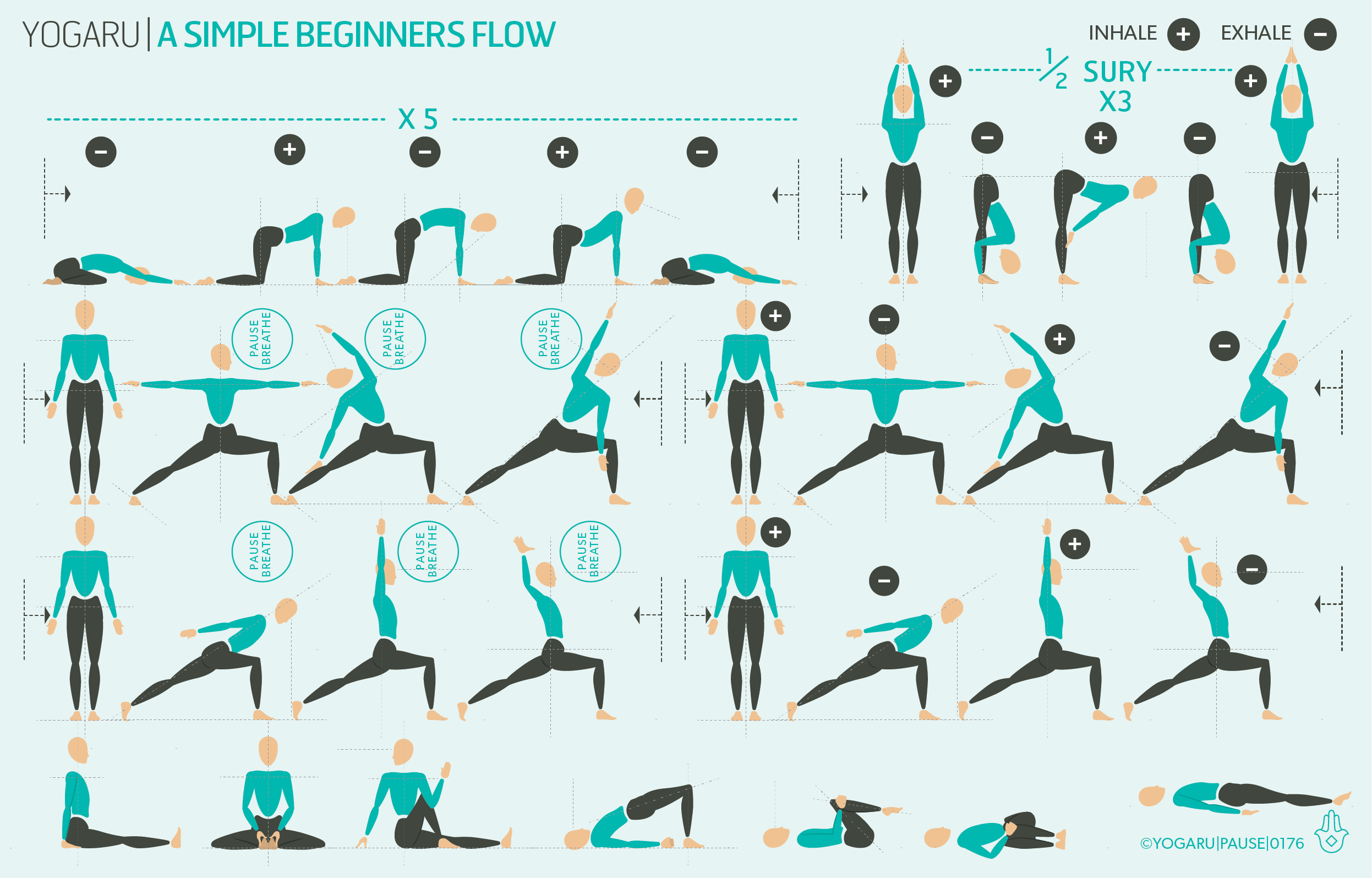
Begin with sun salutations: Mountain pose, forward fold, plank, cobra, downward dog—repeat with breath. These build the flow foundation. I still warm up with them daily; they’re simple yet profound.
- Mountain Pose (Tadasana): Stand tall, ground feet.
- Forward Fold (Uttanasana): Hinge at hips, release back.
- Plank Pose: Build core strength.
- Cobra/Upward Dog: Open chest.
- Downward Dog: Stretch hamstrings.
A simple beginners flow — YOGARU
Common Beginner Mistakes to Avoid
Rushing transitions without breath leads to fatigue; go at your pace. Ignoring alignment risks strain—use mirrors or teachers. I once tweaked my wrist ignoring form; lesson learned: quality over speed.
Advanced Vinyasa Practices for Seasoned Yogis
For pros, layer in arm balances, inversions, and faster paces to challenge limits. Themes like heart-openers add depth. In advanced classes I lead, we explore creative sequences, pushing boundaries while honoring the body.yogajournal.com
Building Complex Sequences
Start with basics, add twists or binds progressively. A sample: Sun sal A to warriors, then crow pose flow. Experimenting keeps it exciting, like composing your own symphony on the mat.
Incorporating Props for Advancement
Blocks for deeper stretches, straps for binds—props aren’t cheats; they’re enhancers. I use them in tough poses, turning “impossible” into achievable with a dash of humility.
A Guide for Vinyasa Yoga Teachers
Teaching Vinyasa means crafting safe, inspiring classes with clear cues and themes. Observe students, offer mods. My best classes stem from empathy—remembering my beginner struggles to guide others gently.school.myvinyasapractice.com
Sequencing Tips for Engaging Classes
Theme around elements like “grounding” with standing poses, peaking at inversions, then savasana. Balance effort and ease. I’ve themed classes around seasons, adding storytelling for that human touch.
Teacher Training Options
Look for Yoga Alliance-certified programs like 200-hour Vinyasa trainings. Online or in-person, focus on anatomy and philosophy. I did mine in India—transformative, blending theory with practice.bookyogaretreats.com
Where to Find Vinyasa Yoga Classes
Search locally via apps like Mindbody or Google for “Vinyasa yoga near me.” Studios like CorePower or community centers offer options. Online platforms like Alo Moves provide at-home flows. In my area, I found gems through word-of-mouth—try free trials to vibe-check.solfirejstreet.com
Best Tools and Props for Vinyasa Yoga
Invest in a grippy mat like Manduka PRO for stability during flows. Props: Jade Harmony mat for eco-friendliness, blocks for support. Apps like Down Dog customize sequences. My kit? A reliable mat, towel for sweat, and blocks—essentials for smooth practice.manduka.com
- Manduka GRP: Hot yoga grip.
- Liforme: Alignment lines.
- Hugger Mugger blocks: Sturdy support.
People Also Ask About Vinyasa Yoga
Drawing from common searches, here’s what folks often wonder.arhantayoga.org
Is Vinyasa Yoga Good for Beginners?
Yes, with modifications—start slow to build confidence.
What’s the Difference Between Vinyasa and Hatha?
Vinyasa flows dynamically; Hatha holds poses statically.
What Are the Benefits of Vinyasa Yoga?
From strength to stress relief, it’s a full-spectrum boost.
How Does Vinyasa Differ from Ashtanga?
Vinyasa is creative; Ashtanga follows set series.
FAQ
What should I wear to a Vinyasa class?
Breathable, moisture-wicking clothes like leggings and tanks—nothing too loose to avoid tangles during flows.
How often should I practice Vinyasa yoga?
Aim for 3-5 times weekly for noticeable benefits, but listen to your body to prevent overdoing it.
Can Vinyasa yoga help with weight loss?
Absolutely, its cardio element burns calories, combined with mindful eating for best results.
Is Vinyasa suitable for seniors?
Yes, with gentle modifications—focus on breath and balance for joint-friendly practice.
What if I can’t do advanced poses?
No worries; use props and build gradually—yoga’s about progress, not perfection.
Wrapping up, Vinyasa yoga isn’t just poses; it’s a moving meditation that adapts to you, whether student or teacher. From my mat to yours, give it a try—you might just find that flow you’ve been missing. Namaste.